2015
Who is on top / Is it you? Perhaps / Do you yell? Yes / Do you treat me bad? Yes / Do you love me? Definitely / Do you teach me to treat badly to someone weaker? Yes / Do you want me? Maybe / Treating me badly is ok, you love me right? / Do I want you to love me? Forever / You promised that if I am good I will rise up right? Right / You fed me through your body, so you will love no matter what? Right? / I am as good as you right? Better / First you caress me and now you slap me? I recognize this hand; my love / I am doing like you did, so it’s the correct thing to do, right? No / Are we made from the same material? Everybody / But why? I am the only one who knows how to it right / Do I care? Unfortunately, all the time / I am hungry, will you feed me? Only if you succeed / I ach, can’t you hear me? You told me you would do anything for me / Do you hate me for ruining your life when you made me? Perhaps / Maybe together we are stronger? Definitely. Do the others know about it?
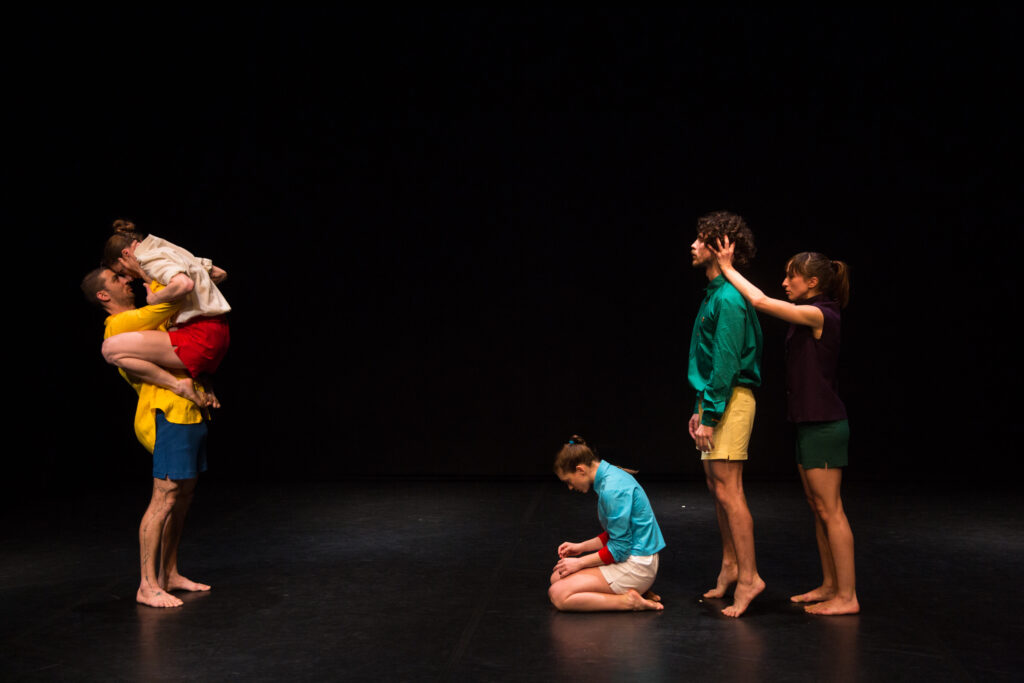
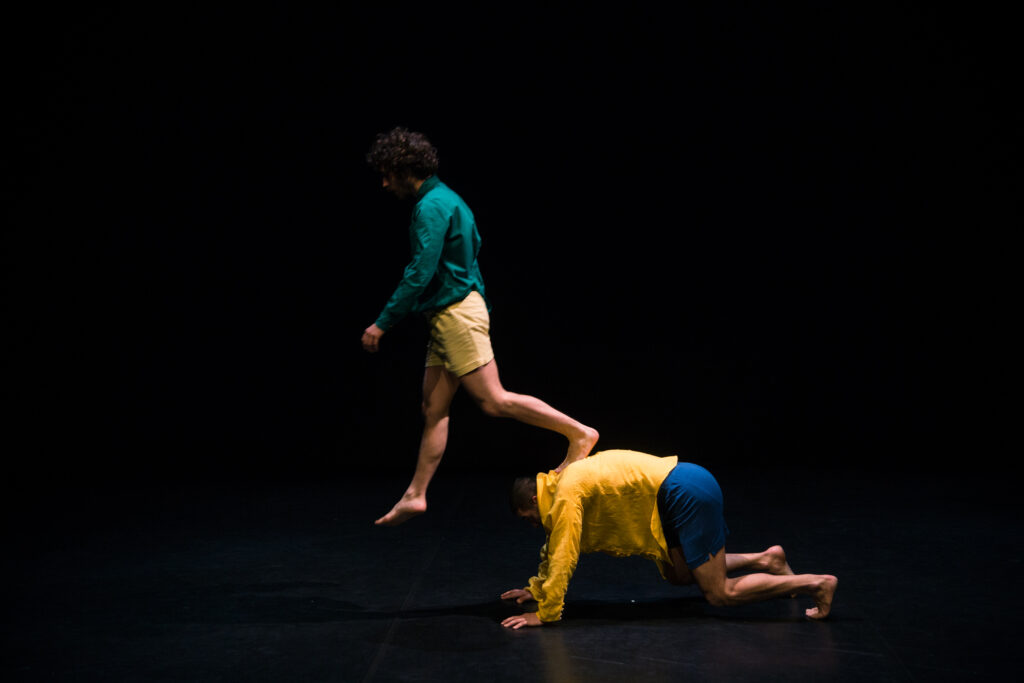
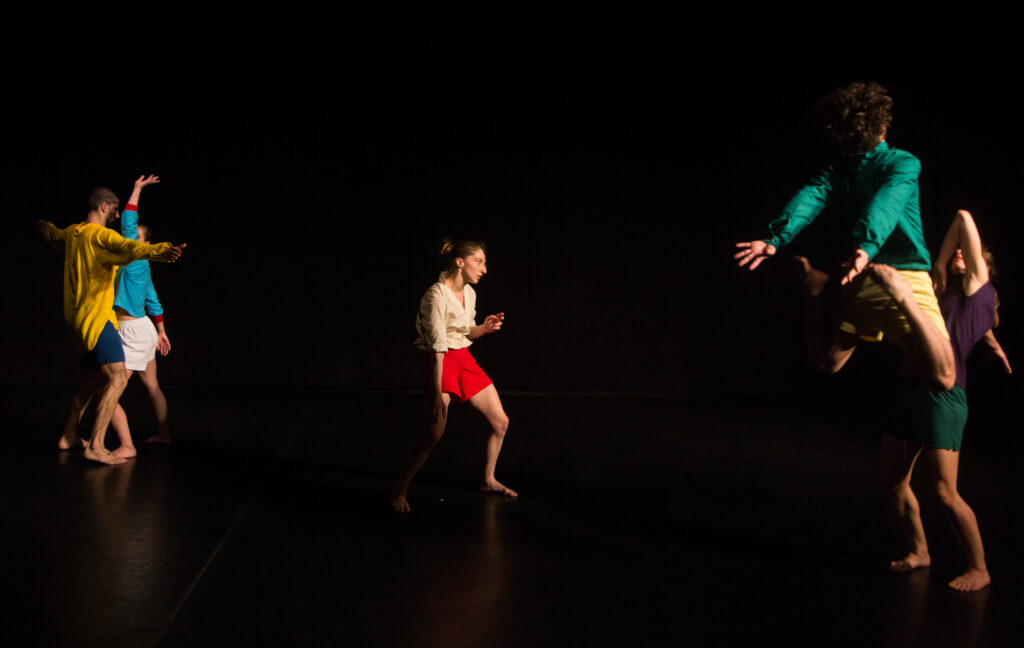
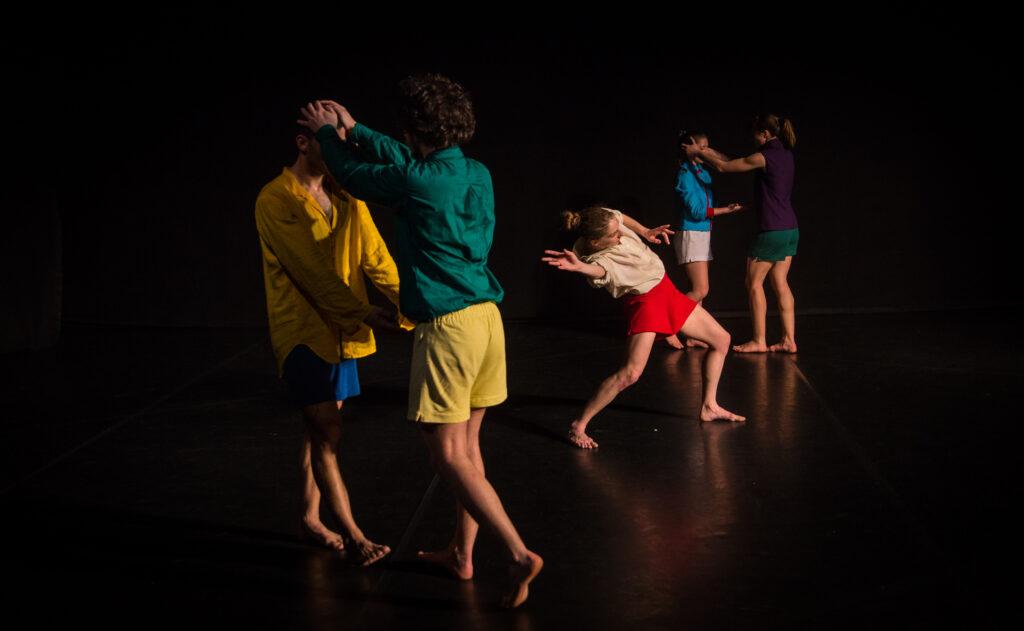
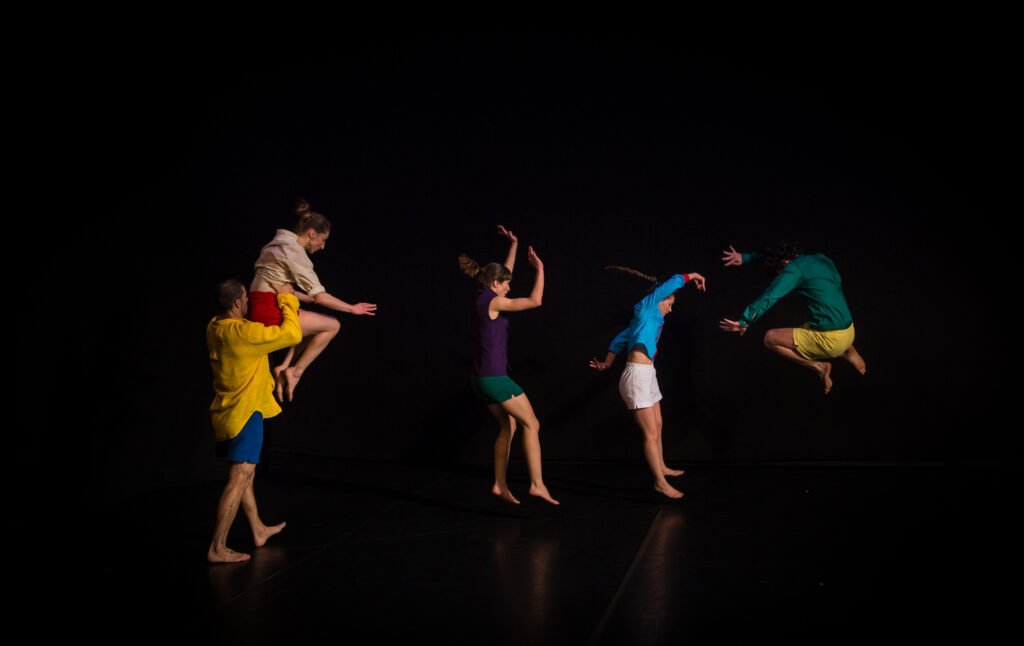
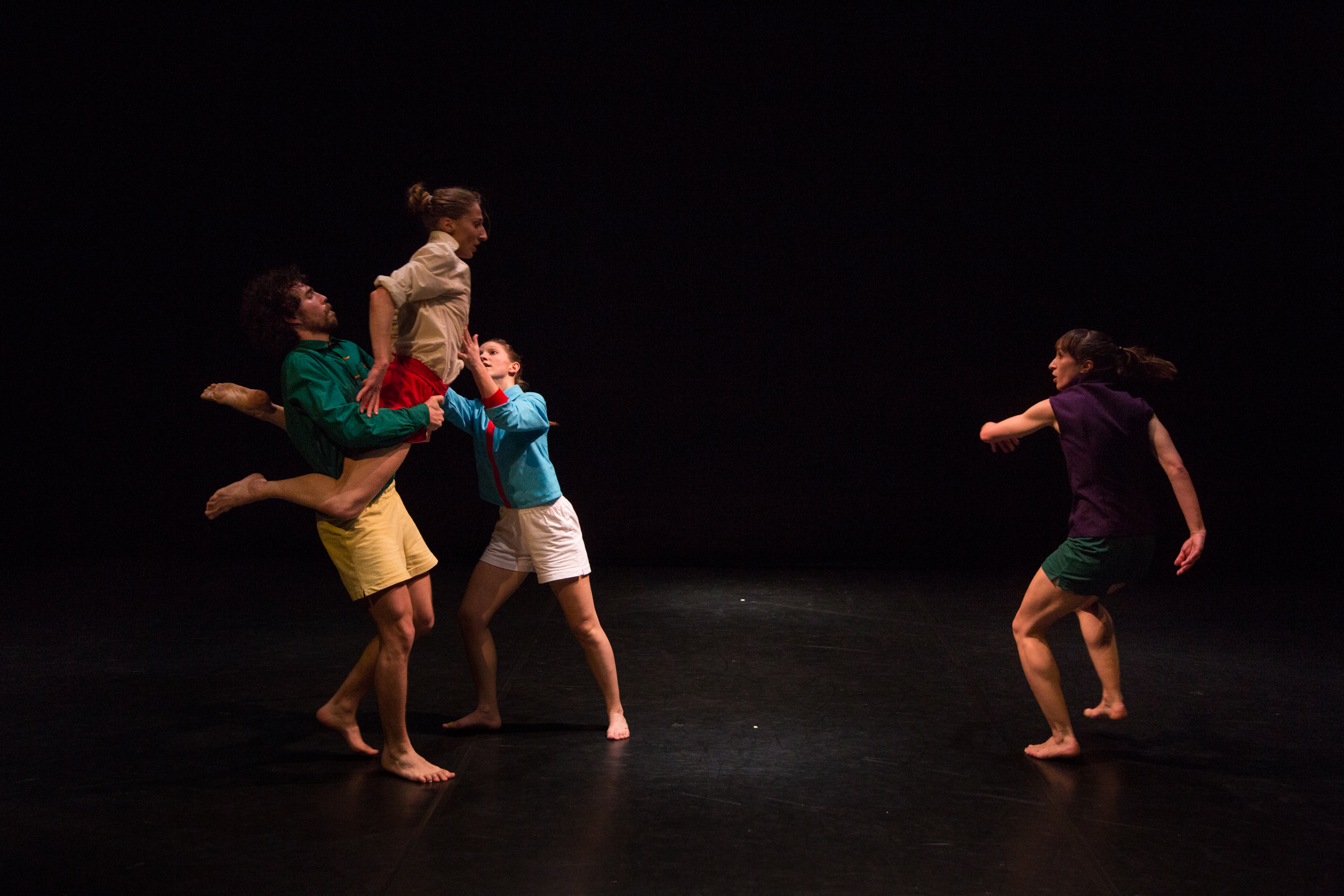
Five people, five points in space or five points in a life time. A performance that indicates rather than comments on how we all exert power. A mother, a boyfriend, a friend, a boss and a child. The form of the movement is the one that narrates parts of each one stories. All of them walk through the same paths; each one will choose his own space, direction and the moment in time where he will dominate intentionally or unintentionally, directly or indirectly the rest. At the end? We are all made from the same material.
Α mother, a child, a friend, a comrade and a boss weave a story which becomes universal. The choreographic approach emphasizes the unique movement identity and power relationships of each role, but avoids personalizing the narrative of the five stories.
CONTRIBUTORS
Concept/choreographic composition: Artemis Lampiri
Original music: Alexandros Karadimos / Dimitris Tasainas
Performers: Achilleas Chariskos, Candy Karra, Ioanna Konstantinos Rizos, Ioanna Toumpakari +1
Light design: Michalis Kloukinas
Costume design: Dimitra Liakoura
Photos: Stavros Petropoulos
Promo video/ Trailer: Stavros Symeonidis
Premiered at Onasis Cultural Foundation on the 14th of February 2015
Coproduction: Onassis Cultural Centre, NEON Foundation, MAN dance company
Duration of the performance: 60 minutes
Whether someone becomes a parent, best friend, life partner, teacher, leader and/or anything one may think of, for a moment in his life he will become the authority figure for someone else. Whether it’s a matter of nature or a matter of position, being “on top” always alters ones’ personality.
How do people manage authority when it’s given to them? Does a mother always act in the benefit of her child or does she act to her own benefit? Does the governor act to the benefit of his country or to his own personal benefit? Do friends take advantage of their friendship or do they become antagonistic vis-a-vis to love affairs? When does it all begin, how do we internalize authority and what pact does it have to our lives?
Five people: A mother, a child, a boyfriend, a friend, and a boss.
“Me On Top” is a dance piece with 5 overlapping chapters. The story of a mother, the story of a child, the story of a boyfriend, the story of a friend and the story of a boss and the people that surround each one. These five stories deal with the change within each individual when being in control. What happens when the employees don’t listen to their boss? What does the boyfriend do when he is together with his friend and girlfriend? How does the child narrate his story, and how does the mother? Two women and three men, that can become at the same time both masters and servants. Who needs who is a mind-game, since everybody needs everyone else in order to define and defend their title.
This dance piece wants to have a spectrum on all aspects of authority and relate to situations that every single one of us might come across in his/her life.
In the choreographic process we will investigate each character in order to find his/her own personal physicality. What is the movement character of a boyfriend in his 20’s? How does it change when he becomes 40? And how does it change when he feels that he is the one on top in the relationship? We will investigate each character separately and try to find clichés and recognizable behavioral movement as well as a unique characteristic that makes this person special in his own environment.